
Upgrades
What Is Premium Economy? Seats, Amenities, and Whether It's Worth the Upgrade

Premium economy is the cabin class that quietly became one of the smartest ways to fly long-haul. It sits between economy and business class, offering meaningfully more comfort without the eye-watering price tag of a lie-flat seat.
But what exactly do you get? And is it actually worth the extra money? Let's break it all down.
What Is Premium Economy, Exactly?
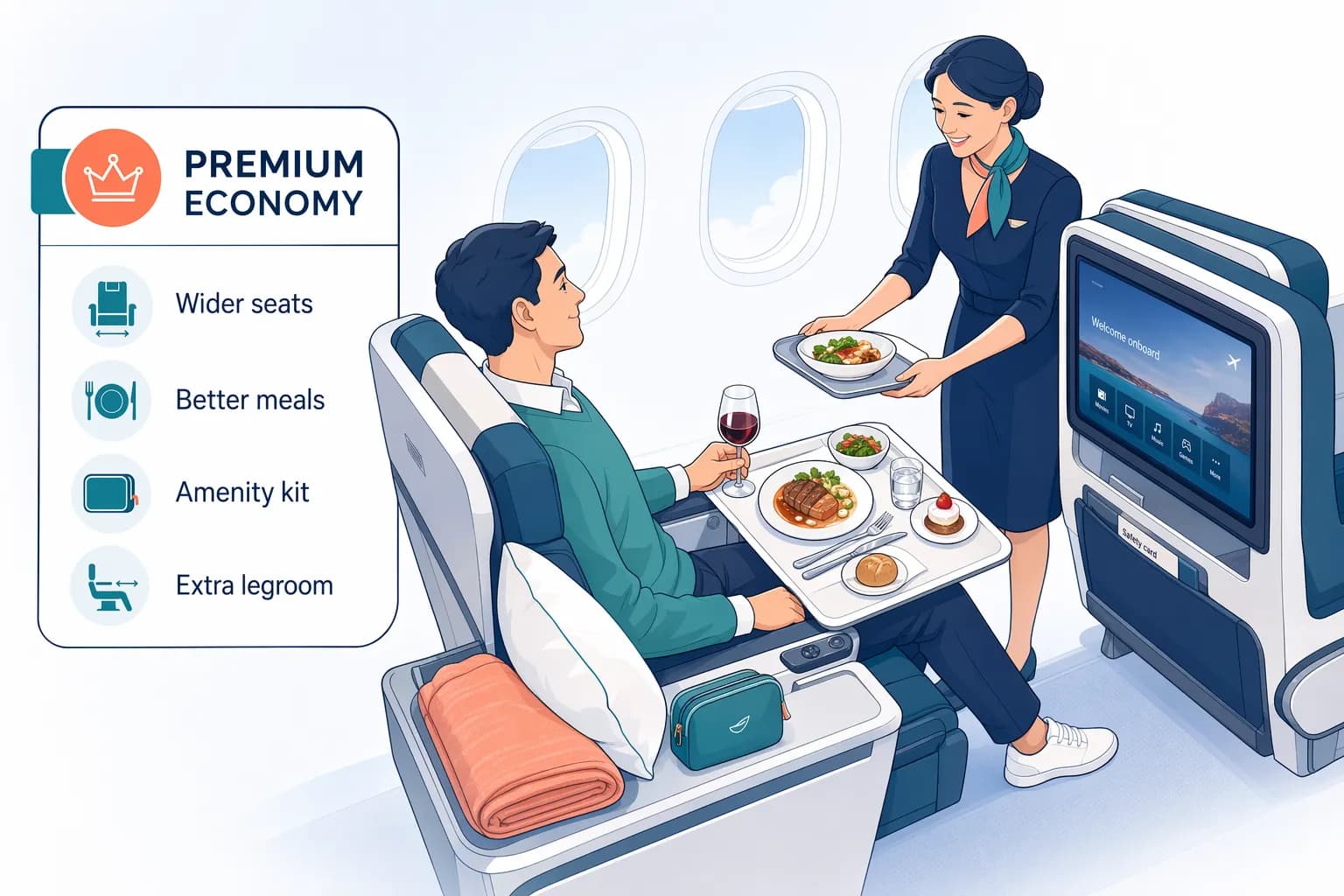
Premium economy is a distinct cabin class offered on most major airlines for long-haul international flights. It's not just "economy with extra legroom" — it's a separate section of the plane with wider seats, better recline, upgraded meals, and improved service.
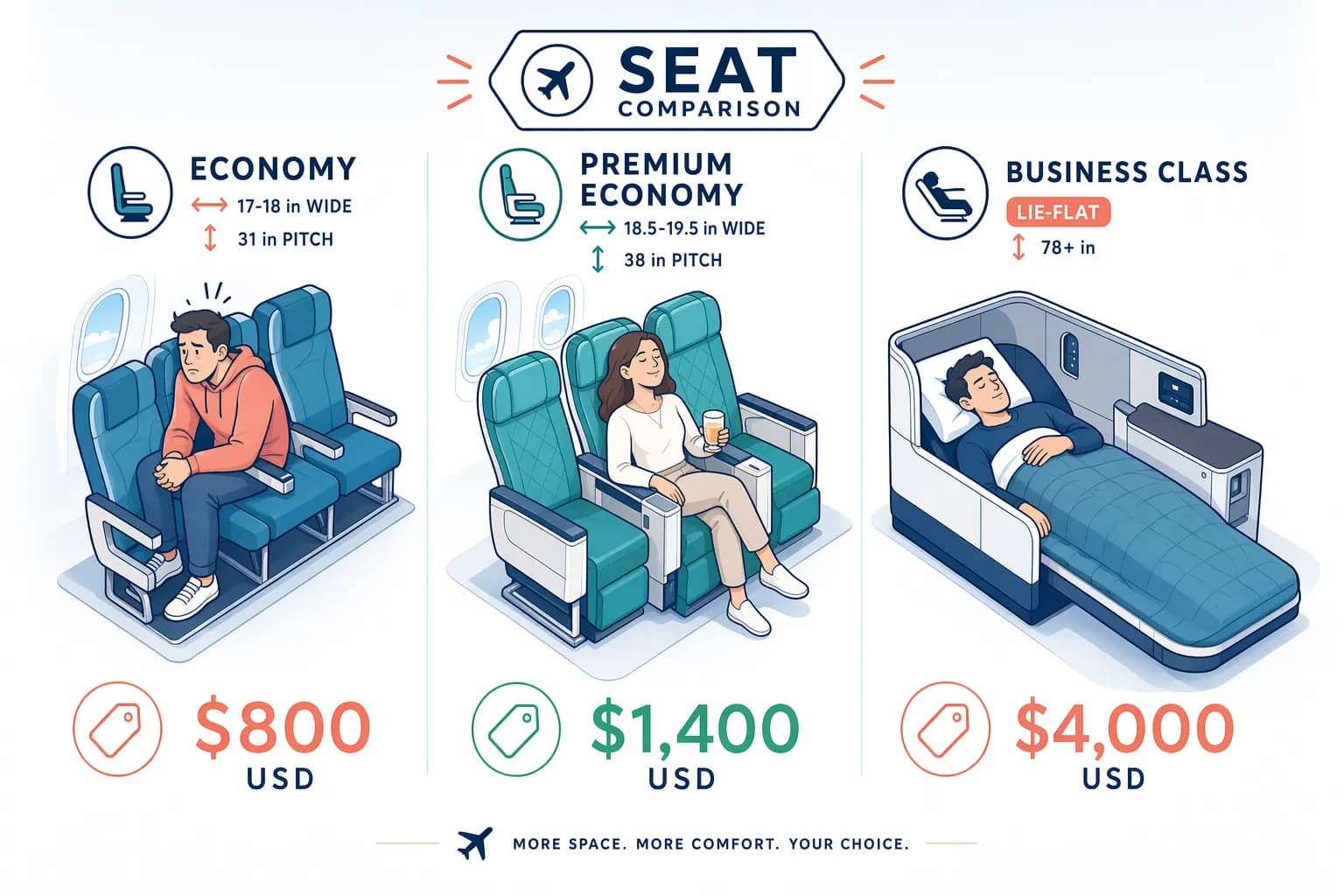
Think of it as the sweet spot. You get roughly 38 inches of seat pitch (compared to 31-32 in regular economy), seats that are 18.5 to 19.5 inches wide, and 6 to 8 inches of recline. Most carriers also throw in noise-reducing headphones, an amenity kit, premium bedding, and a multi-course meal with complimentary wine and spirits.
The cabin is physically separated from economy, usually with its own curtain and dedicated flight attendant service. It feels different. That's the whole point.
Premium Economy vs Economy: What's the Difference?
The gap between premium economy and regular economy is bigger than most people expect. Here's what changes when you move up.
Seat Space
Standard economy gives you about 31-32 inches of pitch and seats that are 17-18 inches wide. Premium economy bumps that to 38 inches of pitch and 18.5-19.5 inches of width. On a 10-hour flight, those extra inches are the difference between arriving stiff and miserable versus actually getting some sleep.
Meals and Drinks
Economy meals are functional at best. Premium economy gets you multi-course dining — a starter, main course, and dessert — served on real dishware. Complimentary beer, wine, and spirits are standard, and many airlines offer a welcome drink before takeoff.
Amenities
Premium economy passengers typically receive an amenity kit (eye mask, socks, toothbrush, sometimes skincare products), noise-reducing headphones, a larger entertainment screen, and premium bedding including a full-size pillow and blanket. Economy passengers get a thin blanket and whatever headphones they brought from home.
Baggage and Boarding
Most airlines include an extra checked bag allowance for premium economy and offer priority boarding. Some carriers also provide dedicated check-in counters and priority baggage handling on arrival.
Premium Economy vs Business Class: Where's the Line?
Business class is a different universe. Lie-flat seats, direct aisle access for every passenger, multi-course restaurant-quality meals, lounge access at the airport, and cabins designed for sleeping. Premium economy doesn't touch any of that.
The seats in premium economy don't go flat. You won't get lounge access (with rare exceptions). The food is better than economy but not business-class caliber. And the privacy? Minimal compared to the suites and pods you'll find up front.
But here's the thing: business class typically costs 3-5x more than economy. Premium economy runs about 1.5-2x the economy fare. For many travelers, especially those paying out of pocket rather than on a corporate card, premium economy delivers 80% of the comfort improvement at 30% of the business class price.
That math gets even better when you're strategic about booking. On a non-basic cash fare booked directly with American, Delta, JetBlue or United, Autopilot tracks the price after booking and reprices the reservation when it drops, and the savings come back as airline credit or a refund you can put toward premium economy on a later trip.
What Does Premium Economy Cost?
Pricing varies wildly by airline, route, and demand. But here are some real-world benchmarks.
On transatlantic routes (New York to London, for example), economy round-trips typically run $800-$1,000. Premium economy on the same flights lands around $1,400-$2,000. That's roughly a 50-100% premium.
For transpacific routes (Los Angeles to Tokyo), expect the gap to be similar — sometimes wider on peak dates. Ultra-long-haul flights to Australia or Southeast Asia can see premium economy fares at 2-3x economy during high demand periods.
The sweet spot for value is booking early on competitive routes. When multiple airlines fly the same corridor, premium economy pricing stays more reasonable.
Airline-by-Airline Premium Economy Comparison
Not all premium economy products are created equal. Here's how the major carriers stack up in 2026.
| Airline | Product Name | Seat Pitch | Seat Width | Recline | Screen Size | Amenity Kit |
|---|---|---|---|---|---|---|
| Japan Airlines | Premium Economy | 42" | 19" | 7" | 15.6" | Yes |
| Virgin Atlantic | Premium | 38" | 21" | 7" | 13.3" | Yes |
| Singapore Airlines | Premium Economy | 38" | 19" | 8" | 13.3" | Yes |
| Cathay Pacific | Premium Economy | 40" | 19.3" | 8" | 15.6" 4K | Yes |
| Emirates | Premium Economy | 40" | 19.5" | 8" | 13.3" | Yes |
| Delta | Premium Select | 38" | 18.5-19.5" | 7" | 13.3" | Someone Somewhere kit |
| United | Premium Plus | 38" | 18.5-21" | 6" (5.5" on A321XLR) | 13" (16" on Elevated 787-9 and A321XLR) | Yes |
| American Airlines | Premium Economy | 38" | 18.5-21.3" | Not published | Seatback, size not published | Yes, on international and select LA/NY flights |
| EVA Air | Premium Economy | 42" | 19" | 8" | 13.3" | Yes |
| Air New Zealand | Premium Economy | 41" | 19.3" | 9" | 13.3" | Yes |
A few things jump out. Japan Airlines and EVA Air lead in raw legroom at 42 inches. Virgin Atlantic's 21-inch seats are among the widest, alongside the A321XLR seats at United (21 inches) and American (21.3 inches). Cathay Pacific's premium economy has a 15.6-inch 4K display, and United fits 16-inch 4K OLED screens in Premium Plus on its Elevated 787-9 and A321XLR. Among the US Big Three, Delta's Premium Select comes with a Someone Somewhere amenity kit, a memory-foam pillow and a plush blanket.
When Is Premium Economy Worth It?
Premium economy makes the most sense on long-haul flights — anything over 7-8 hours. The comfort difference on a 12-hour flight to Tokyo or a 10-hour red-eye to London is substantial.
It's particularly worth it when:
- You're tall or broad-shouldered. The extra width and pitch make a real difference for larger passengers.
- You need to arrive functional. If you're heading straight into meetings or a packed travel day,the better sleep and reduced fatigue are worth the premium.
- The price gap is reasonable. When premium economy is only 40-60% more than economy, the value is strong. When it's double or more, the math gets harder.
- You can't justify business class. Premium economy gives you the biggest comfort-per-dollar improvement on the entire plane.
It's less worth it on short-haul flights under 4-5 hours, where the seat difference matters less and you're paying for amenities you barely have time to enjoy.
How to Get Upgraded to Premium Economy
There are several ways to score a premium economy seat without paying full freight.
Book Smart, Then Let Prices Work for You
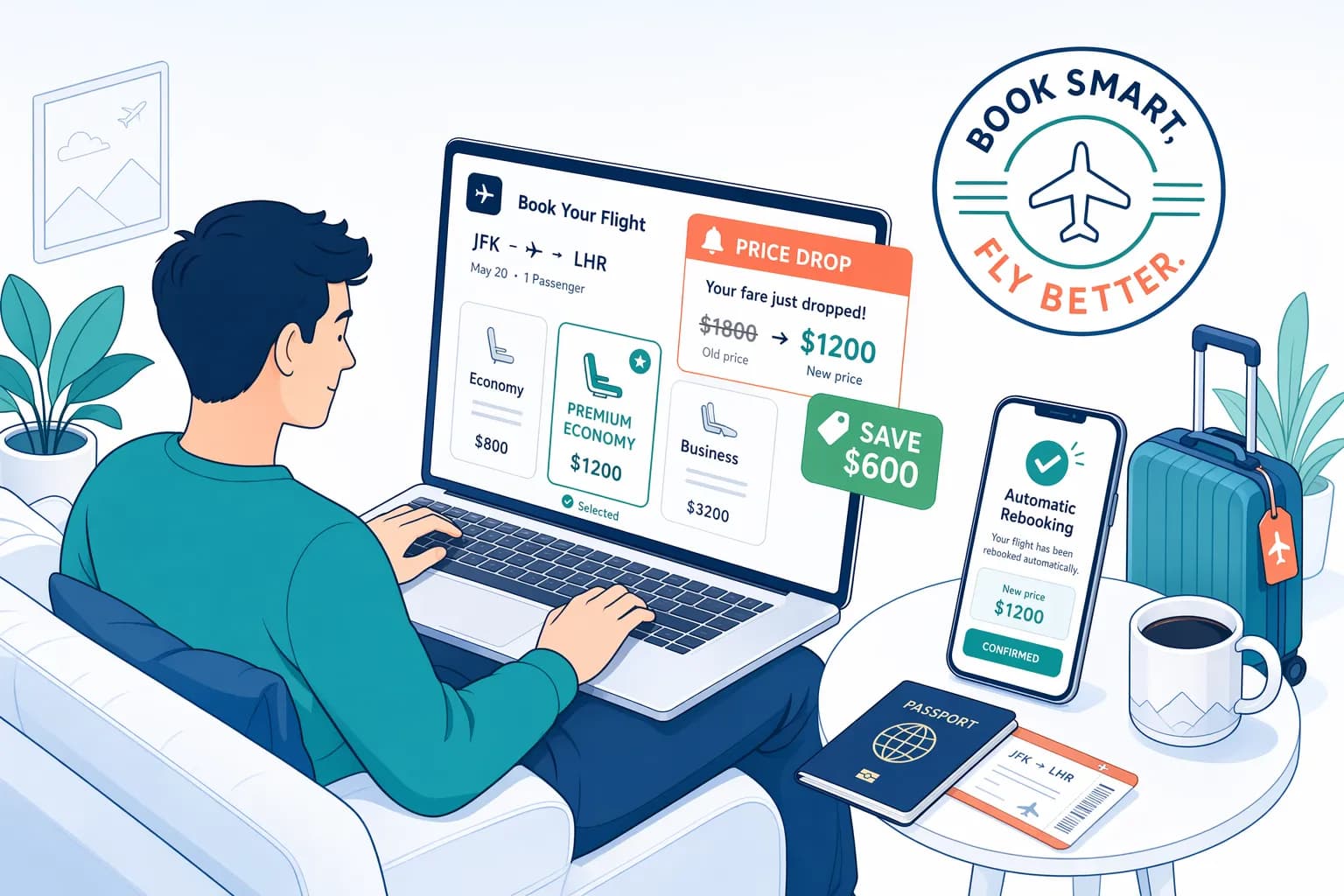
One approach: book a non-basic economy fare in cash directly with American, Delta, JetBlue or United, then add your trip to Autopilot, which tracks the fare after booking and reprices it when it drops. The savings come back as airline credit or a refund, which you can put toward premium economy on a later trip.
Use Airline Miles and Points
Most frequent flyer programs let you book premium economy with miles or use points to upgrade from economy. American Airlines now offers "Instant Upgrades" with dynamic pricing in miles. United's PlusPoints system lets elite members upgrade at booking. Check your airline's program — the award chart sweet spots for premium economy are often better than business class.
Bid for Upgrades
Airlines like Cathay Pacific, Virgin Atlantic, Singapore Airlines, and Air New Zealand offer upgrade bidding programs. You submit a bid after booking economy, and if the cabin isn't full, you might get bumped up for a fraction of the retail price difference.
Earn Elite Status
Airline elite status members often receive complimentary or discounted upgrades to premium economy. Delta SkyMiles Medallion members, United Premier members, and American AAdvantage elites all have upgrade pathways, though the specifics change yearly.
Check for Last-Minute Deals
Airlines sometimes offer upgrade deals at check-in — either online 24 hours before departure or at the airport gate. These can be significantly cheaper than buying the premium economy ticket outright.
Long-Haul vs Short-Haul Premium Economy
Not all premium economy experiences are equal, and the biggest variable is flight length.
On long-haul international flights (8+ hours), you get the full premium economy experience: dedicated cabin, multi-course meals, amenity kits, premium bedding, larger screens, and proper service. This is where the product shines.
On shorter domestic or medium-haul flights, "premium economy" can mean very different things. Some airlines simply offer extra-legroom economy seats with no additional service. Others provide a modest upgrade with slightly better snacks and drinks. The gap between premium economy and regular economy narrows significantly on shorter routes.
Bottom line: if you're going to spend the money, spend it on the long flights where you'll actually feel the difference.
How to Get the Best Deal on Premium Economy
The smartest premium economy travelers don't just search and book. They play the long game.
Book early on competitive routes to lock in the best fares. Set fare alerts. Be flexible with dates if you can — midweek flights almost always have better premium economy pricing than weekend departures.
And once you book your premium economy fare in cash directly with American, Delta, JetBlue or United, Autopilot can track it for you. When the whole reservation drops $20 or more, it reprices the reservation, and the savings come back as airline credit or a refund. On a higher premium economy fare, the same percentage drop is worth more in dollars.
Frequently Asked Questions
What is the difference between premium economy and economy?
Premium economy offers wider seats (18.5-19.5" vs 17-18"), more legroom (38" pitch vs 31-32"), better recline (6-8" vs 3-4"), upgraded multi-course meals with complimentary alcohol, noise-reducing headphones, amenity kits, larger entertainment screens, and priority boarding. It's a physically separate cabin with dedicated service.
Is premium economy worth the extra money?
On long-haul flights over 7-8 hours, absolutely — especially when the fare is only 50-60% more than economy. The comfort improvement is dramatic. On short flights under 4-5 hours, the value diminishes quickly since you barely have time to enjoy the amenities.
How much more does premium economy cost than economy?
Typically 50-100% more than economy on international routes. For example, a New York to London round-trip might cost $800-$1,000 in economy and $1,400-$2,000 in premium economy. The markup varies by airline, route, and how far in advance you book.
Do premium economy passengers get lounge access?
Generally, no. Lounge access is typically reserved for business and first class passengers or airline elite status members. A few exceptions exist — some airlines offer lounge access with certain premium economy fare classes on specific routes — but don't count on it.
Which airline has the best premium economy?
Japan Airlines leads in legroom (42" pitch), Virgin Atlantic offers some of the widest seats (21"), and Cathay Pacific has 15.6" 4K screens. Skytrax named Virgin Atlantic the World's Best Premium Economy in 2025. Among the US Big Three, the widest premium economy seats are on the A321XLRs at United (21") and American (21.3").
Can you get upgraded to premium economy for free?
Yes, through airline elite status (complimentary upgrades), operational upgrades when economy is oversold, or loyalty program points. Some airlines also let you bid for upgrades at check-in, which can be significantly cheaper than buying the ticket outright.
What airlines call their premium economy products?
Every airline has its own branding. Delta calls it Premium Select, United calls it Premium Plus, British Airways calls it World Traveller Plus, and Cathay Pacific, Singapore Airlines, and Japan Airlines simply call it Premium Economy. American Airlines also uses Premium Economy.
Do premium economy seats recline flat?
No. Premium economy seats recline 6-9 inches, which is significantly more than economy (3-4 inches) but nowhere close to the lie-flat beds you get in business class. The recline is enough to find a comfortable sleeping angle on a long flight, but you won't be sleeping horizontally.
Disclaimer: Premium economy products vary by airline and route. Amenities, seat specs, and pricing mentioned here are accurate as of April 2026 but may change. Always check with your airline for current offerings.
The Autopilot Crew
Keep reading
Delta Premium Select: Seats, Routes and Is It Worth It (2026)
Delta Premium Select is Delta's premium economy cabin: a wider recliner with a leg rest, Sky Priority and a full meal. Seats, routes, fares and when it pays.
Delta Comfort Plus (Now Delta Comfort): Perks and Is It Worth It
Delta Comfort Plus is now Delta Comfort. What it includes, how Comfort Basic, Classic and Extra differ, and when the extra legroom is worth paying for.
United Premium Plus (Premium Economy): What You Get, Is It Worth It
United Premium Plus is United's premium economy cabin, not Economy Plus. Seats, meals, which planes have it, the 2026 fare tiers, cost, and when it's worth it.